Understanding the PLI Scheme for Textiles
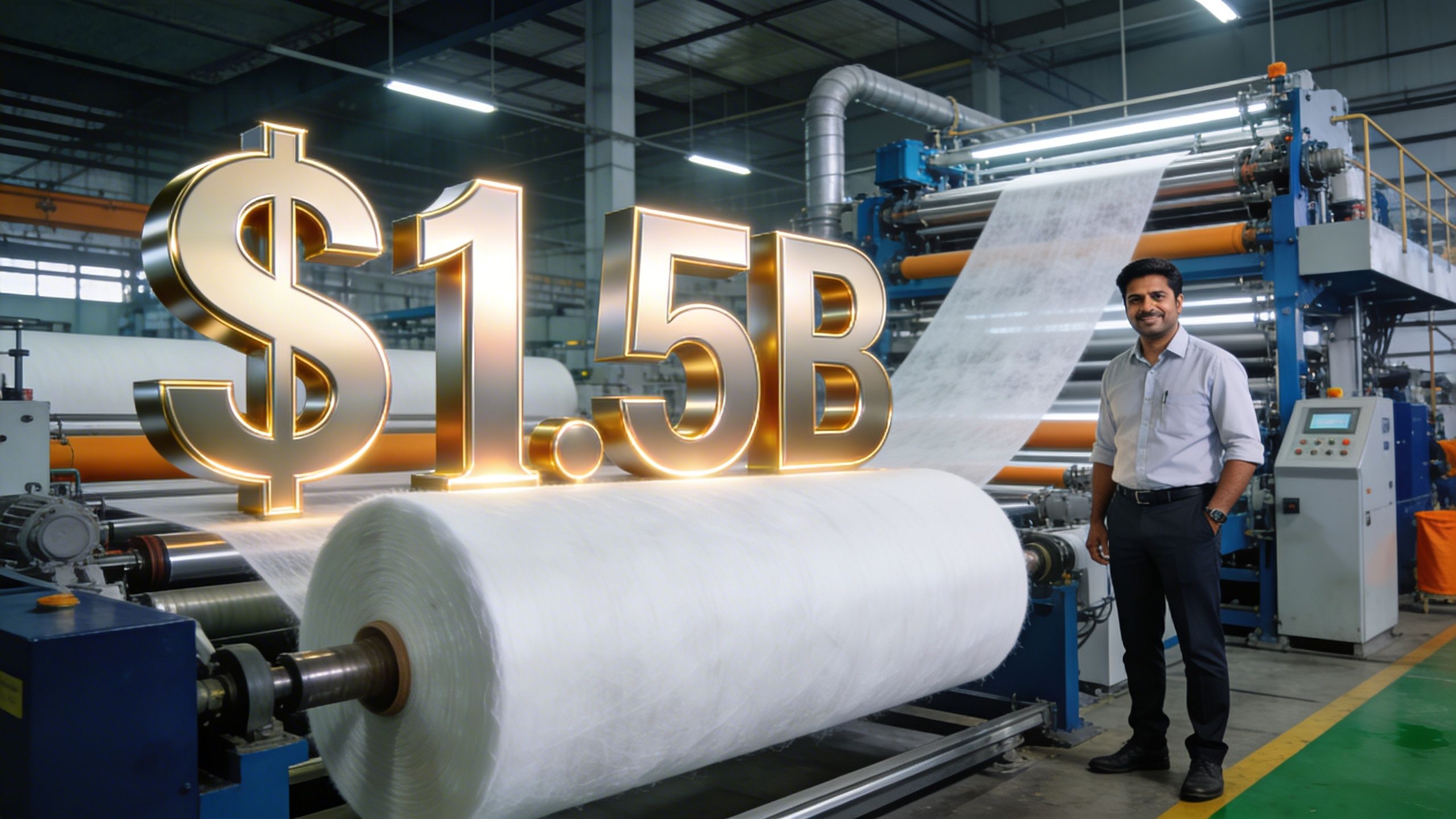
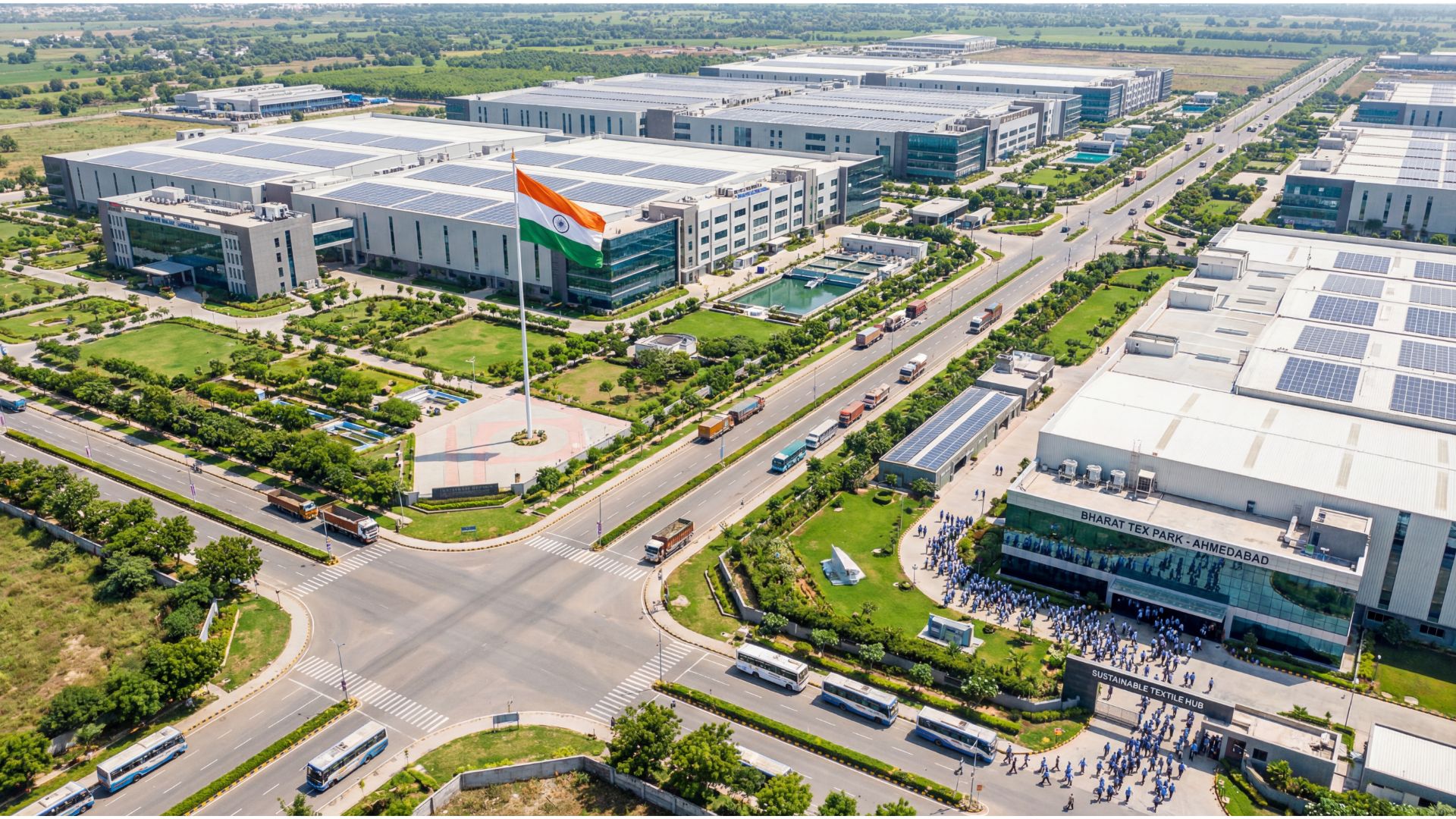
India's Production Linked Incentive (PLI) scheme for textiles is one of the most significant government interventions in the country's manufacturing sector. With a total allocation of ₹10,683 crore over five years, the scheme is designed to incentivise domestic production of Man-Made Fibre (MMF) apparel, MMF fabrics, and technical textiles — segments where India has historically lagged behind competitors like China, South Korea, and Taiwan.
For garment factory owners and textile manufacturers, the PLI scheme is not just a subsidy programme — it is a strategic opportunity to upgrade machinery, improve production capabilities, and position their businesses for long-term growth. In 2026, the scheme's impact on machinery procurement across India is unmistakable.
How the PLI Scheme Works
The PLI scheme provides financial incentives based on incremental production over a base year. In simple terms, if your factory produces more than what it did in the base year, you receive a percentage-based incentive on the incremental revenue. This structure directly rewards manufacturers who invest in higher-capacity, modern machinery.
Key Parameters
- Incentive rate: Ranges from 3% to 11% of incremental turnover, depending on the product category and investment size
- Minimum investment threshold: ₹300 crore for large-scale investors (Part 1) and ₹100 crore for other applicants (Part 2)
- Incentive duration: Up to 5 years from the date of achieving the minimum production threshold
- Eligible products: MMF apparel, MMF fabrics, and 10 categories of technical textiles
Eligibility Criteria
To qualify for PLI benefits, manufacturers must meet the following conditions:
- Company registration: Must be registered in India under the Companies Act 2013 or LLP Act 2008
- Minimum investment: Commit to investing at least ₹100 crore (Part 2) or ₹300 crore (Part 1) in plant, machinery, and equipment
- Product focus: At least 50% of production must be in eligible MMF or technical textile categories
- Incremental production: Must achieve year-on-year production growth over the base year to claim incentives
- Quality standards: Products must meet specified quality benchmarks and BIS/ISO standards where applicable
How PLI Incentives Drive Machinery Upgrades
The Investment-Production Loop
The PLI scheme creates a positive feedback loop: invest in better machinery, increase production capacity and quality, earn higher incentives, and reinvest in further upgrades. Factory owners who have embraced this cycle are seeing tangible results.
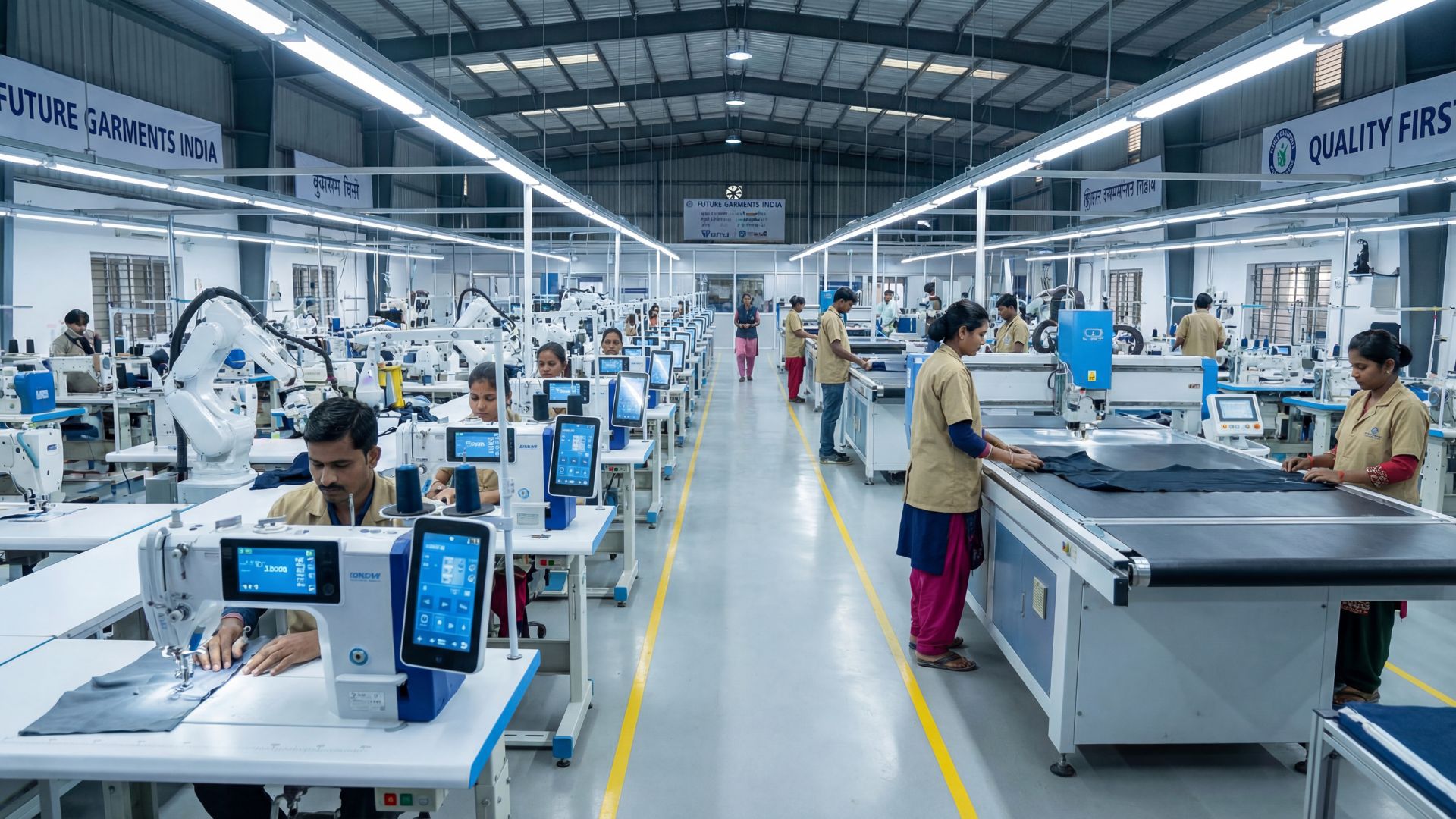
For example, a medium-scale garment manufacturer producing MMF apparel can make a significant investment in automated sewing, cutting, and fusing machinery to achieve a substantial output increase while reducing defect rates. The incremental production qualifies for PLI incentives on the additional revenue — which, over the scheme's duration, can recover a meaningful portion of the machinery investment.
Which Machines Qualify and Deliver Maximum Impact?
While the PLI scheme does not prescribe specific machinery brands, the investment must be in plant, machinery, and equipment used for manufacturing eligible products. Here are the categories where upgraded machinery delivers the strongest ROI under PLI:
Automated Sewing Systems
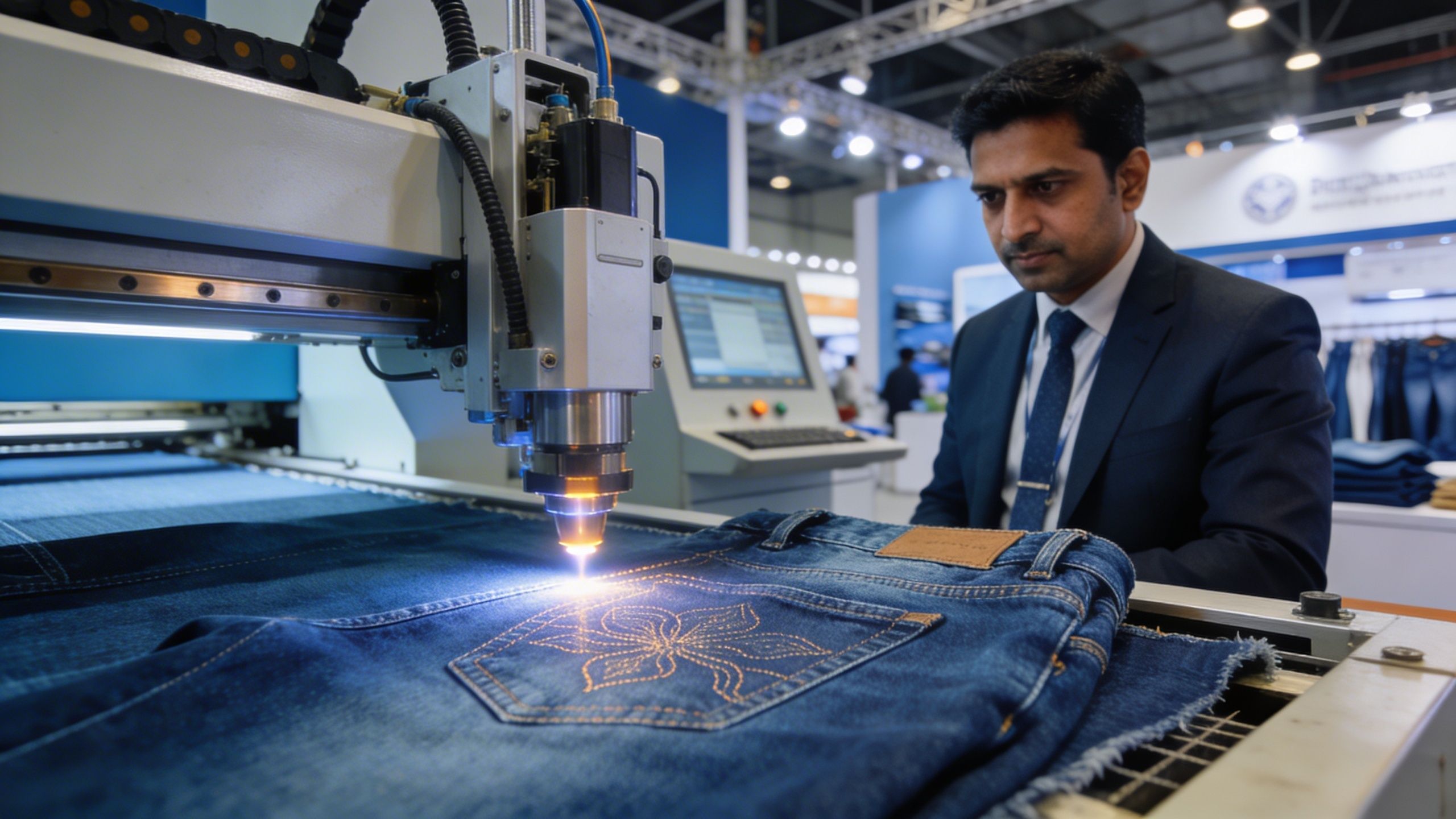
PFAFF programmable sewing machines with digital stitch control are ideal for MMF apparel production. Man-made fibres like polyester and nylon require precise tension control and consistent stitch formation that only automated machines can deliver reliably. The higher throughput directly contributes to the incremental production needed to claim PLI benefits.
Precision Cutting Machines
Kuris automated cutting systems achieve significant waste reduction and increase cutting speed substantially compared to manual methods. For MMF fabrics, which can be more expensive than natural fibres, the material savings alone justify the investment. The higher cutting capacity also enables the production volumes required for PLI thresholds.
Industrial Fusing Systems
Veit fusing machines ensure consistent bond strength across MMF fabrics, which behave differently from cotton during fusing due to their thermoplastic properties. Incorrect fusing temperatures or pressure can damage MMF fabrics permanently. Automated fusing systems with precise digital controls eliminate this risk and maintain consistent quality at high volumes.
Overlock and Seaming Machines
Maier overlock machines are engineered for high-speed seaming of synthetic and blended fabrics. Their differential feed systems handle the stretch characteristics of MMF knits without puckering or distortion — a common quality issue when using standard machines on synthetic fabrics.
Real-World Impact: How Factories Are Benefiting
Across India, garment and textile manufacturers who have invested in modern European machinery under the PLI scheme are reporting meaningful improvements across their operations. Factories producing MMF apparel have seen substantial increases in daily output using the same floor space, along with significant quality improvements that have reduced rejection rates from export buyers. The PLI incentives earned on incremental turnover are helping these manufacturers recover a considerable portion of their machinery investment over the scheme's duration.
In the technical textiles segment, manufacturers specialising in geotextiles and industrial fabrics have invested in PFAFF heavy-duty sewing systems and Kuris multi-ply cutting machines. The resulting production growth has generated substantial cumulative incentives, effectively supporting their next phase of expansion. These results demonstrate that the right machinery investment, aligned with PLI scheme requirements, creates a powerful cycle of growth and reinvestment.
Maximising Your PLI Benefits: A Practical Checklist
- Audit your current machinery: Identify bottleneck machines that limit your production capacity and quality
- Focus on MMF and technical textiles: These are the categories with the highest PLI incentive rates
- Choose machinery that scales: Invest in machines that can operate at higher speeds and longer duty cycles to maximise incremental output
- Document everything: PLI claims require detailed production records, investment proof, and quality documentation
- Plan your timeline: Align machinery procurement with PLI scheme deadlines to ensure you qualify from the earliest possible date
- Work with experienced machinery distributors: Your machinery partner should understand PLI requirements and help you select equipment that maximises both production capacity and incentive eligibility
How Magnum Resources Helps You Leverage PLI Benefits
At Magnum Resources, we work with garment and textile manufacturers across India who are using the PLI scheme to transform their production capabilities. As India's leading distributor of European textile machinery — representing PFAFF, Maier, Kuris, IMA, Veit, ZSK, RAUSCH, and INA Systems — we understand both the technical requirements of modern textile manufacturing and the commercial realities of PLI scheme compliance.
Our team helps you identify the machinery investments that will deliver the highest incremental production gains, ensuring you maximise your PLI incentives while building a factory that meets international quality standards. From initial consultation and machinery selection to installation, training, and after-sales service, we are your end-to-end partner.
Ready to upgrade your factory under the PLI scheme? Speak with our machinery consultants at info@magnumresources.co.in or call +91 99241 04568 for a personalised assessment.