The Technology Shift in Indian Garment Manufacturing
India's garment manufacturing industry is undergoing its most significant technological transformation in decades. Driven by export quality demands, government incentive schemes, rising labour costs, and the need to compete with automated factories in China, Vietnam, and Bangladesh, Indian manufacturers are investing in advanced textile machinery at an unprecedented pace.
In 2026, five key machinery trends are reshaping how Indian garment factories operate. Understanding these trends is essential for any manufacturer looking to stay competitive, reduce costs, and win larger orders from international buyers.
Trend 1: AI-Powered Sewing Machines with Automatic Correction
Artificial intelligence is no longer a futuristic concept in garment manufacturing — it is now embedded in the latest generation of industrial sewing machines. AI-powered sewing systems can detect and correct stitching errors in real time, adjusting thread tension, stitch length, and feed speed automatically based on fabric behaviour.
How It Works
Advanced sensors integrated into the sewing head continuously monitor stitch formation, fabric feed, and thread tension. When the system detects a deviation from the programmed parameters — such as a skipped stitch, uneven tension, or fabric puckering — it makes micro-adjustments within milliseconds, often before the defect becomes visible to the human eye.
Impact on Production
- Defect reduction: AI-corrected sewing dramatically reduces stitch-related defects compared to conventional machines
- Operator skill dependency: Even less experienced operators can produce consistent quality, addressing India's skilled labour shortage
- Fabric versatility: The same machine adapts automatically to different fabric types without manual recalibration
PFAFF's latest programmable sewing machines incorporate intelligent stitch regulation and digital monitoring systems that represent this trend. Their machines are widely used in Indian factories producing automotive textiles, technical fabrics, and premium garments where zero-defect production is mandatory.
Trend 2: Automated Cutting Machines That Minimise Fabric Waste
Fabric is the largest cost component in garment manufacturing, representing the majority of the total product cost. Even a small percentage reduction in fabric waste has a massive impact on profitability. This is why automated cutting technology is one of the fastest-growing machinery segments in India.
How Modern Cutting Systems Reduce Waste
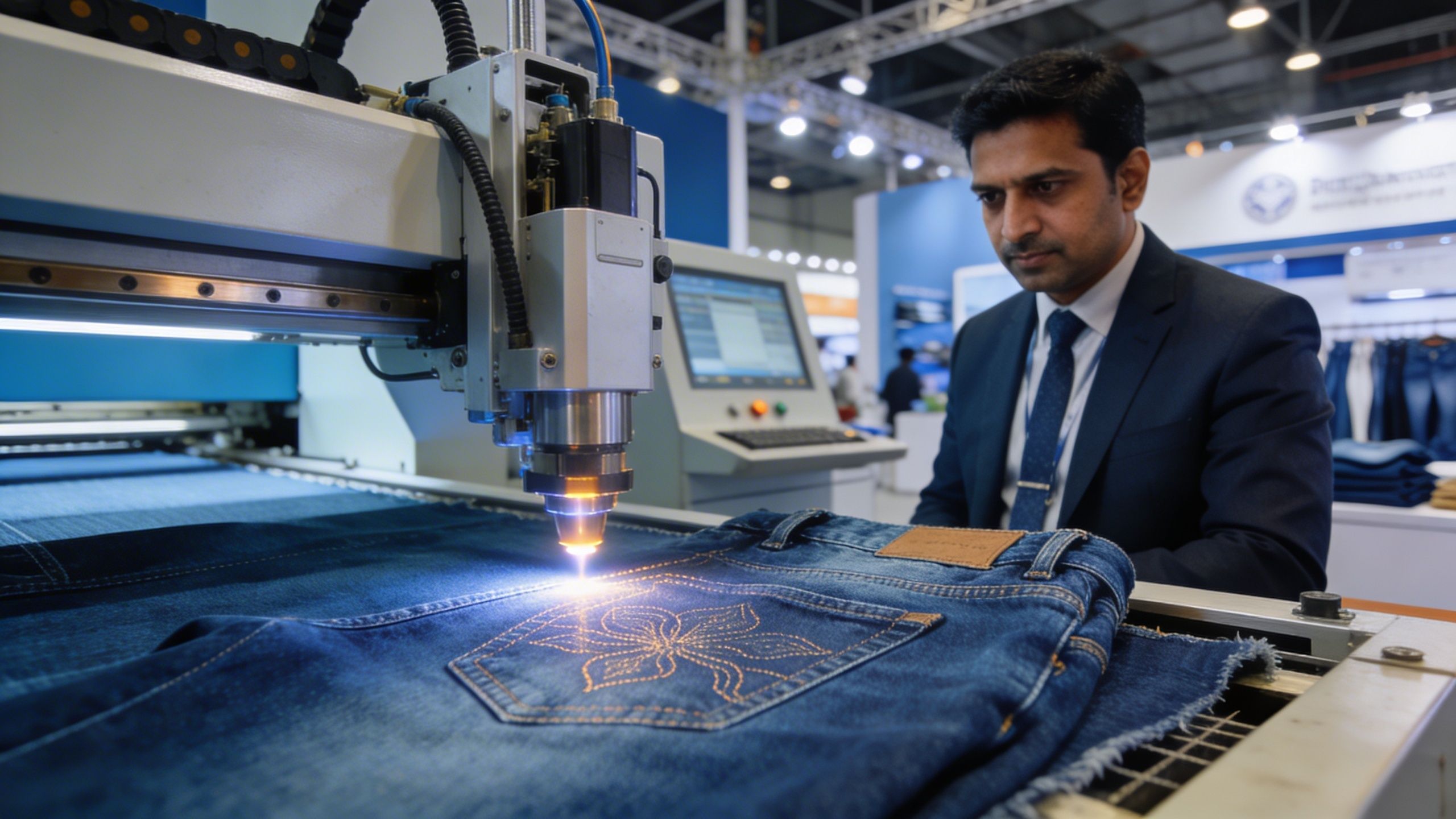
Automated cutting machines use CAD-integrated nesting software to calculate the most material-efficient layout for pattern pieces. The cutting head then follows the digitally programmed path with precision accuracy, eliminating the human error inherent in manual or semi-automatic cutting.
- Nesting efficiency: AI-optimised nesting can achieve notable improvement in material utilisation over manual marker planning
- Cutting precision: Tolerances of less than 1mm ensure consistent sizing across thousands of garment pieces
- Multi-ply capability: Modern machines can cut through multiple fabric layers simultaneously, dramatically increasing throughput
- Reduced recutting: Precision cutting eliminates the need for recutting misaligned pieces, saving both fabric and time
Kuris cutting systems from Germany are at the forefront of this trend. Their spreading and cutting machines are engineered for high-volume garment production and are increasingly seen in Indian factories that supply to international brands with strict sizing tolerances.
Trend 3: Smart Fusing Technology for Consistent Bonding
Fusing — the process of bonding interlining to fabric using heat and pressure — is a critical step that directly affects garment appearance, structure, and durability. Poor fusing leads to bubbling, delamination, and stiff hand-feel, all of which result in quality rejections. Smart fusing technology is solving these problems through precise digital control.
What Makes Fusing Technology 'Smart'
Modern fusing machines use closed-loop temperature control, digital pressure regulation, and belt speed optimisation to maintain exact bonding conditions regardless of production volume or ambient factory conditions. Key advancements include:
- Zone-based heating: Different temperature zones across the fusing belt allow simultaneous processing of different fabric-interlining combinations
- Digital pressure control: Pneumatic systems maintain consistent pressure across the entire fusing width, eliminating edge-to-edge variation
- Energy efficiency: New-generation fusing machines consume significantly less energy than older models through improved insulation and heat recovery
- Process data logging: Every fusing cycle is digitally recorded, providing traceability for quality audits
Veit Group's fusing systems are the benchmark in this category. Their machines are trusted by garment manufacturers worldwide for consistent bonding quality across all fabric types — from lightweight polyester to heavy wool blends. Indian factories producing export-quality formal wear, suits, and uniforms rely heavily on Veit fusing technology.
Trend 4: Digital Embroidery for Mass Customisation
The demand for customised and embellished garments is growing rapidly, driven by brand differentiation, athleisure trends, and premium positioning. Traditional hand embroidery, while culturally significant, cannot meet the speed, consistency, and scalability requirements of modern production. Digital embroidery machines are bridging this gap.
Capabilities of Modern Embroidery Systems
Digital embroidery machines convert design files directly into stitch patterns, executing complex motifs with thread colour changes, varying stitch densities, and multi-layer effects — all automatically. The operator loads the design, positions the fabric, and the machine does the rest.
- Design complexity: Machines can execute designs with 15+ thread colours and millions of stitches per design
- Speed: Multi-head embroidery machines can embroider dozens of garments simultaneously
- Consistency: Every piece is identical, which is critical for branded apparel and uniform contracts
- Quick changeover: Switching from one design to another takes minutes, not hours
ZSK embroidery machines from Germany lead this category globally. Their multi-head systems are used by Indian manufacturers producing embroidered fashion garments, branded sportswear, caps, and corporate uniforms. ZSK's digital workflow integrates seamlessly with design software, making it possible to go from concept to production in a single day.
Trend 5: IoT-Connected Factory Floors
The Internet of Things (IoT) is transforming garment factories from collections of individual machines into connected, data-driven production systems. IoT-enabled machines communicate their performance data in real time, allowing factory managers to monitor production, predict maintenance needs, and optimise workflows from a central dashboard.
What IoT Means for a Garment Factory
When every machine on the factory floor is connected, you gain visibility into:
- Real-time production tracking: Know exactly how many pieces each line is producing per hour, with automatic alerts when output drops below targets
- Predictive maintenance: Sensor data identifies machines that are likely to break down before they actually fail, significantly reducing unplanned downtime
- Energy monitoring: Track energy consumption per machine and per garment, identifying inefficiencies and reducing utility costs
- Quality analytics: Correlate quality defects with specific machines, operators, or fabric batches to identify root causes quickly
- OEE tracking: Overall Equipment Effectiveness metrics help you understand the true utilisation of your machinery investment
Integration with European Machinery
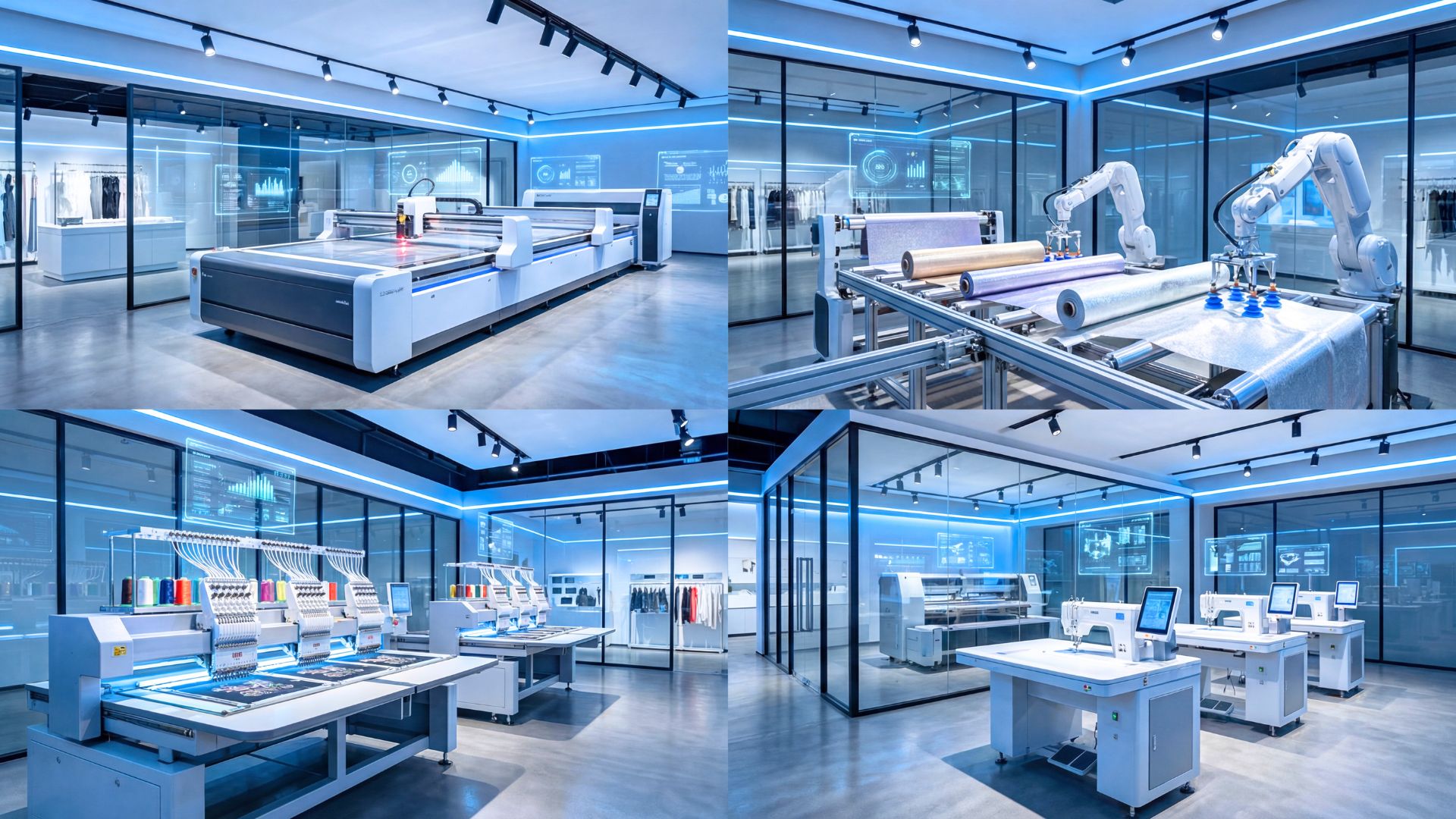
Leading European textile machinery brands are building IoT connectivity into their latest models. PFAFF sewing machines, Kuris cutting systems, Veit fusing lines, and ZSK embroidery machines all offer digital interfaces that can connect to factory-wide monitoring systems. This means Indian factories investing in European machinery are automatically future-proofing their operations for Industry 4.0.
INA Systems and RAUSCH material handling solutions further enhance the connected factory concept by automating material flow between workstations, reducing manual handling time, and providing real-time work-in-progress visibility.
Preparing Your Factory for These Trends
Adopting these five trends does not require replacing your entire production line overnight. A phased approach works best:
- Start with the biggest bottleneck: Identify which operation is limiting your output or quality the most, and upgrade that first
- Choose machinery with built-in connectivity: Even if you are not implementing IoT today, buying connected machines ensures you are ready when you are
- Train your team: New technology requires new skills. Invest in operator and supervisor training alongside machinery purchases
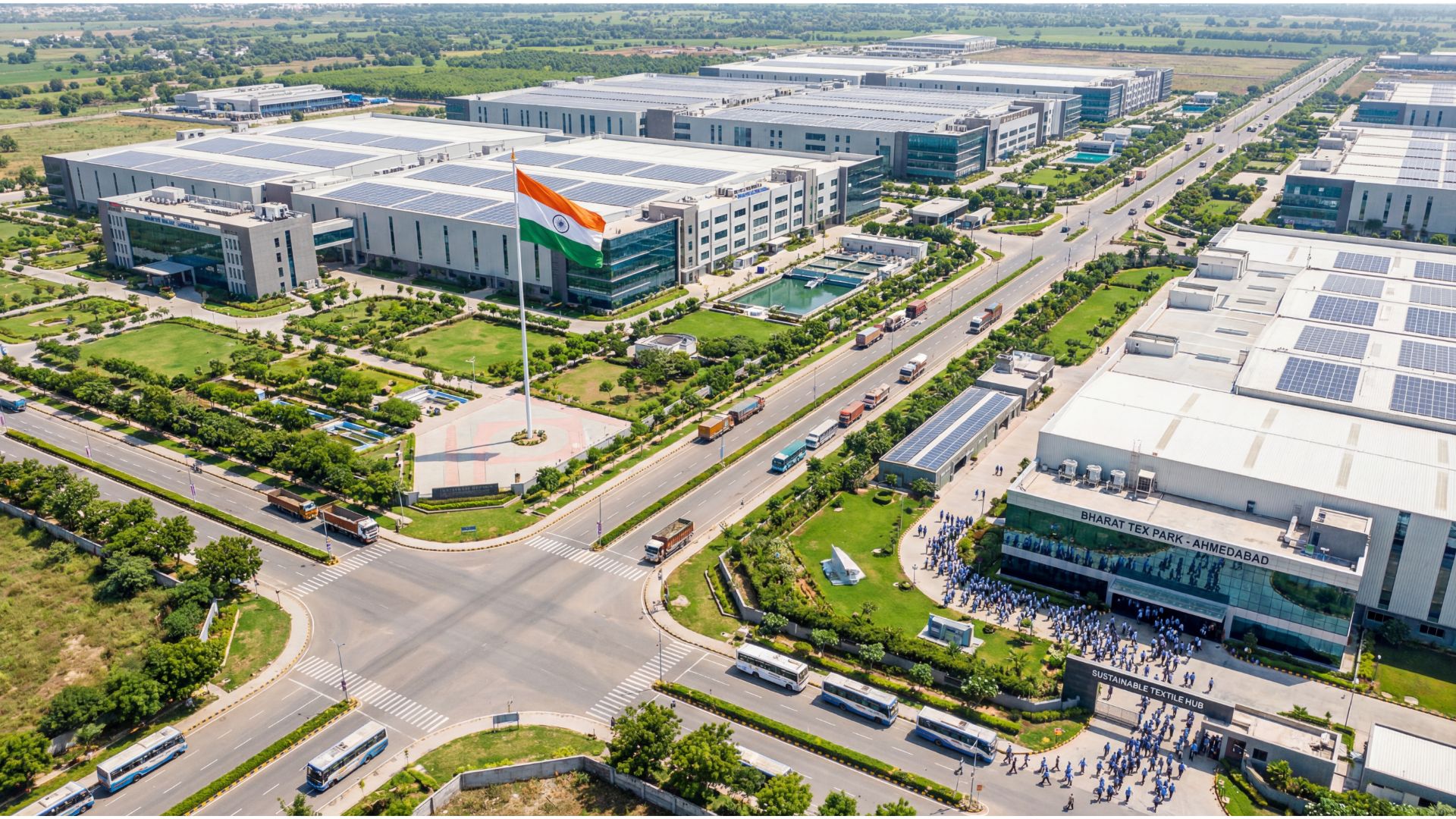
- Leverage government schemes: Use PLI incentives and PM MITRA park benefits to offset your machinery investment costs
- Partner with experts: Work with machinery distributors who understand these trends and can guide your upgrade strategy
Magnum Resources: Your Partner for Future-Ready Manufacturing
At Magnum Resources, we represent the world's leading European textile machinery brands in India — PFAFF, Maier, Kuris, IMA, Veit, ZSK, RAUSCH, and INA Systems. Each of these brands is at the forefront of the trends discussed in this article. Our team works with garment manufacturers across India to plan and execute machinery upgrades that deliver measurable improvements in quality, productivity, and profitability.
From AI-powered sewing and automated cutting to smart fusing, digital embroidery, and IoT integration, we offer the complete technology stack for modern garment manufacturing. Our support includes machinery selection, factory layout planning, installation, operator training, and responsive after-sales service with genuine spare parts availability nationwide.
Ready to bring these trends to your factory floor? Contact Magnum Resources at info@magnumresources.co.in or call +91 99241 04568 to schedule a consultation with our textile machinery experts.