The Automation Revolution in Indian Garment Manufacturing
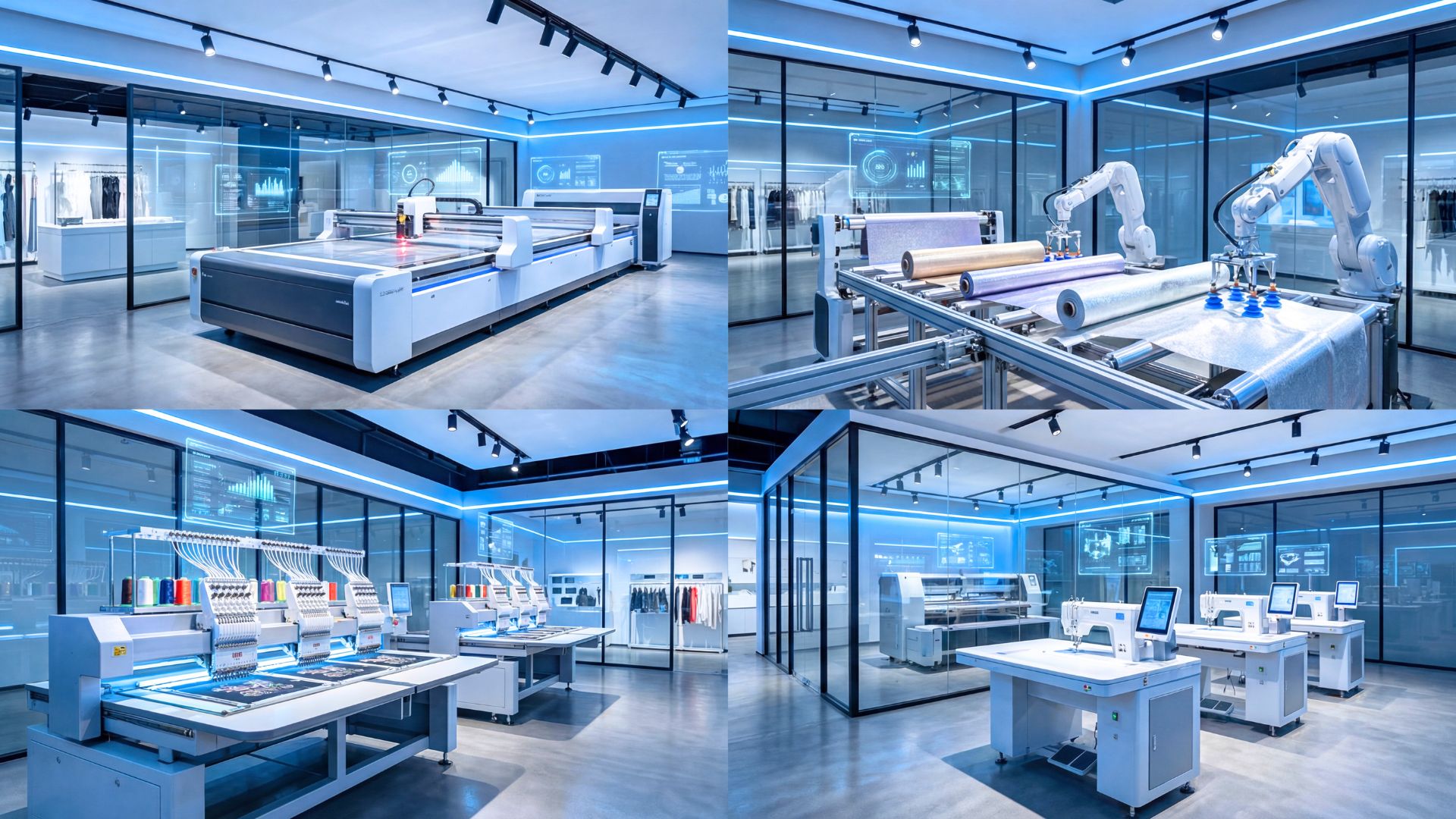
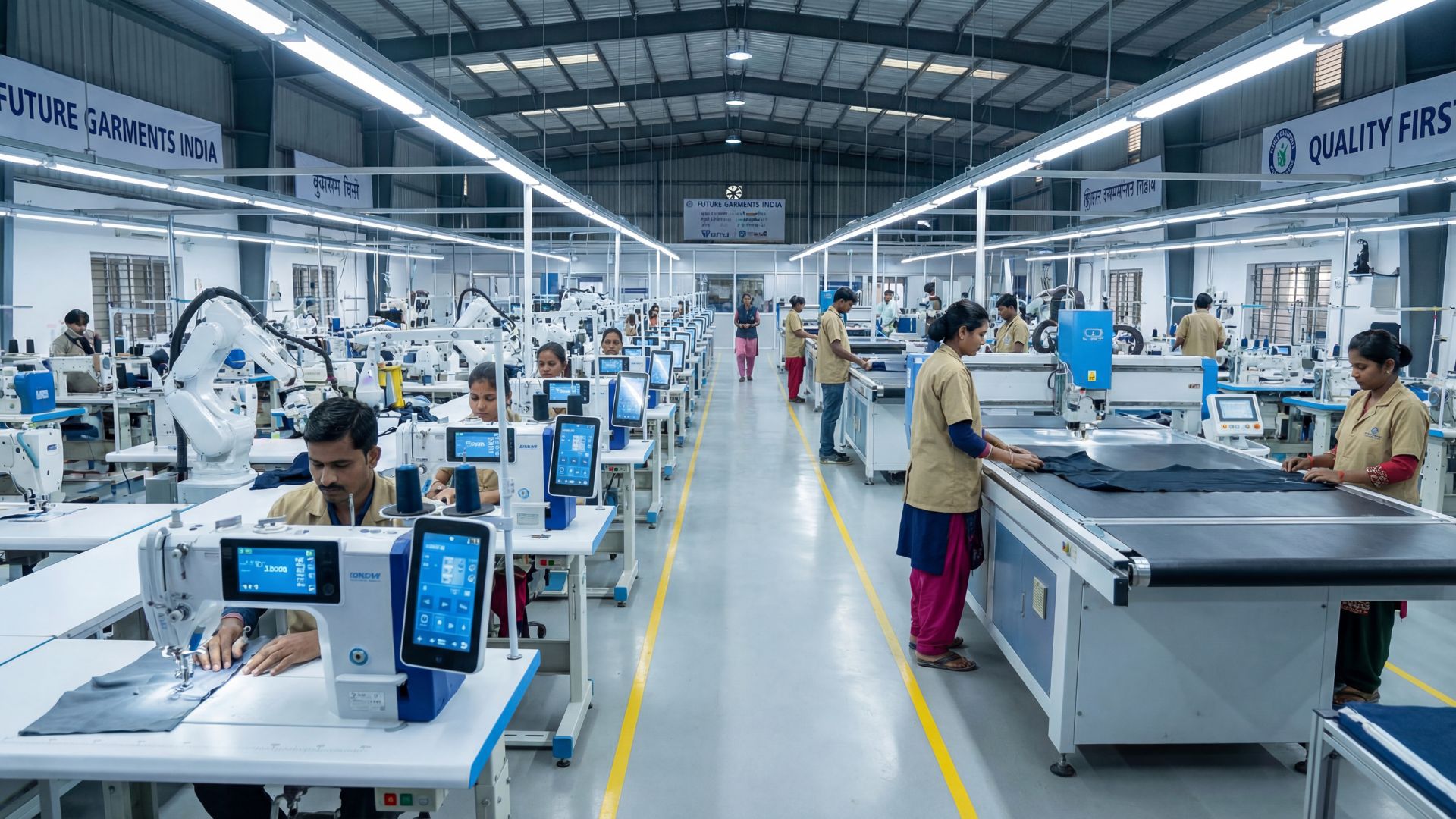
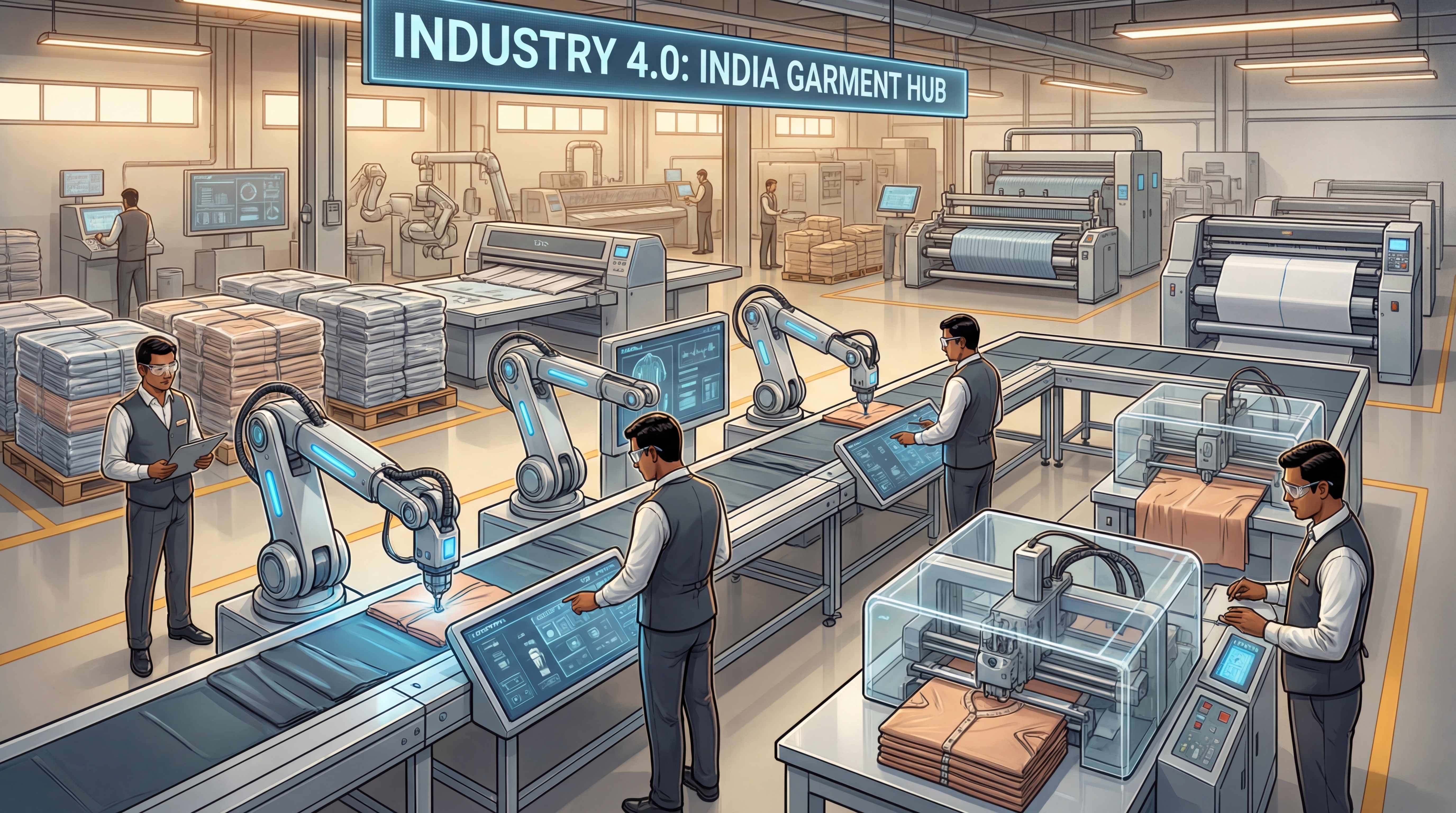
India's textile and apparel industry is at a turning point. As one of the world's largest textile markets, with ambitious growth targets set by the government, manufacturers across the country are rethinking how they produce garments. The biggest shift? Moving from manual and semi-automatic sewing to fully automated, digitally controlled sewing systems.
For decades, India's garment sector relied heavily on manual labour. While this kept initial costs low, it also created challenges — inconsistent stitch quality, high rework rates, slower throughput, and difficulties meeting the stringent quality standards demanded by international buyers. Today, automated sewing machines are solving all of these problems.
What Is Driving This Shift?
1. Rising Labour Costs and Workforce Shortages
The Indian garment industry has seen steady increases in minimum wages across major manufacturing hubs like Tirupur, Bengaluru, Noida, and Ludhiana. At the same time, younger workers are increasingly reluctant to join garment factories. Automated sewing machines reduce dependency on skilled operators, allowing one trained technician to oversee multiple machines simultaneously.
2. Government Push Through PLI Scheme and PM MITRA Parks
The Production Linked Incentive (PLI) scheme for textiles, with an allocation of over ₹10,683 crore, is specifically designed to encourage investment in modern manufacturing infrastructure. The 7 PM MITRA mega textile parks being developed across India are built around the concept of integrated, technology-driven production. Factories setting up in these parks are choosing automated machinery from the start.
3. Export Quality Demands
International brands sourcing from India — including those in the EU, US, and Japan — require consistent stitch quality, precise seam allowances, and zero-defect production. Manual sewing simply cannot achieve the consistently high quality rates that automated systems deliver. Brands are now making automation a prerequisite for vendor qualification.
4. Faster Production Cycles
Fast fashion and quick-response manufacturing demand shorter lead times. Automated sewing machines with programmable patterns, automatic thread trimming, and digital stitch regulation can achieve significantly faster production compared to conventional machines, without sacrificing quality.
Which Automated Sewing Machines Are Indian Factories Choosing?
The preference is clearly towards European-engineered machines that combine precision with reliability. Here are the leading categories:
PFAFF Industrial Sewing Machines
PFAFF, a German brand with over 150 years of engineering heritage, offers programmable flatbed and post-bed sewing machines that are widely used in automotive textiles, technical textiles, and heavy-duty garment manufacturing. Their machines feature digital stitch regulation, automatic presser foot adjustment, and integrated safety systems that reduce operator fatigue and errors.
Maier Overlock and Blindstitch Machines
For seaming, hemming, and edge finishing, Maier machines from Germany deliver consistent quality at high speeds. Their overlock machines are particularly popular in knitwear and underwear manufacturing, where clean edges and stretch compatibility are essential.
Programmable Pocket Setters and Bartacking Units
For denim and trouser manufacturing, fully automatic pocket setter units eliminate the most labour-intensive operations. These machines can set pockets with millimetre precision in seconds, replacing what previously required skilled operators and multiple manual steps.
The ROI of Automation: What Factories Are Experiencing
Here is what a typical garment factory can expect after transitioning to automated sewing systems:
- Labour cost reduction: Significantly fewer operators needed for the same output
- Quality improvement: Defect rates drop significantly with automated stitch control
- Rework savings: Reduced rework saves considerable operational time
- Output increase: Substantially higher daily production with same floor space
- Payback period: Most factories typically recover their investment within a reasonable timeframe
When you factor in the PLI scheme benefits and reduced rejection rates from international buyers, the financial case for automation becomes compelling.
Common Concerns About Automation — And the Reality
“Automation will replace workers”
The reality is that automation changes roles rather than eliminating them. Operators transition from manual stitching to machine supervision, quality control, and maintenance — often at higher wages. India's growing textile output means overall employment in the sector continues to rise.
“The initial investment is too high”
While automated machines cost more upfront than basic models, the total cost of ownership is significantly lower when you account for quality improvements, reduced rework, and higher throughput. Government subsidies and financing options further reduce the effective investment.
“My workers cannot operate these machines”
Modern automated sewing machines are designed with user-friendly digital interfaces. Most manufacturers, including Magnum Resources, provide comprehensive installation, training, and after-sales support. Operators typically become proficient within 2-4 weeks of training.
How to Get Started with Automation
If you are considering upgrading your garment factory with automated sewing machines, here is a practical approach:
- Audit your current production line: Identify the operations with highest labour cost and highest defect rates
- Start with high-impact stations: Pocket setting, buttonholing, bartacking, and hemming typically show the fastest ROI
- Choose reliable machinery partners: Work with distributors who offer European-grade machines with local service support
- Plan operator training: Factor in 2-4 weeks of training time when planning your upgrade
- Leverage government schemes: Apply for PLI benefits and explore PM MITRA park incentives
Magnum Resources: Your Automation Partner
At Magnum Resources, we are India's leading distributor of premium European textile machinery. With principals including PFAFF (Germany), Maier (Germany), RAUSCH (Germany), Veit Group (Germany), IMA (Italy), Kuris (Germany), ZSK (Germany), and INA Systems (Germany), we offer a complete range of automated sewing, cutting, fusing, and material handling solutions.
Our team provides end-to-end support — from machinery selection and factory layout planning to installation, operator training, and ongoing maintenance. Whether you are setting up a new factory in a PM MITRA park or upgrading an existing production line, we have the expertise and product range to help you succeed.
Ready to automate your garment production? Contact our team at info@magnumresources.co.in or call +91 99241 04568 for a free consultation.