Mumbai, March 2026
India's nonwoven fabrics market hit USD 4.4 billion in revenue in 2024 and is projected to grow at 7.6 per cent annually through 2030, according to Grand View Research. The numbers look good on paper. On the ground, domestic producers are scrambling to add capacity fast enough to keep up with demand from infrastructure, hygiene, and automotive sectors.
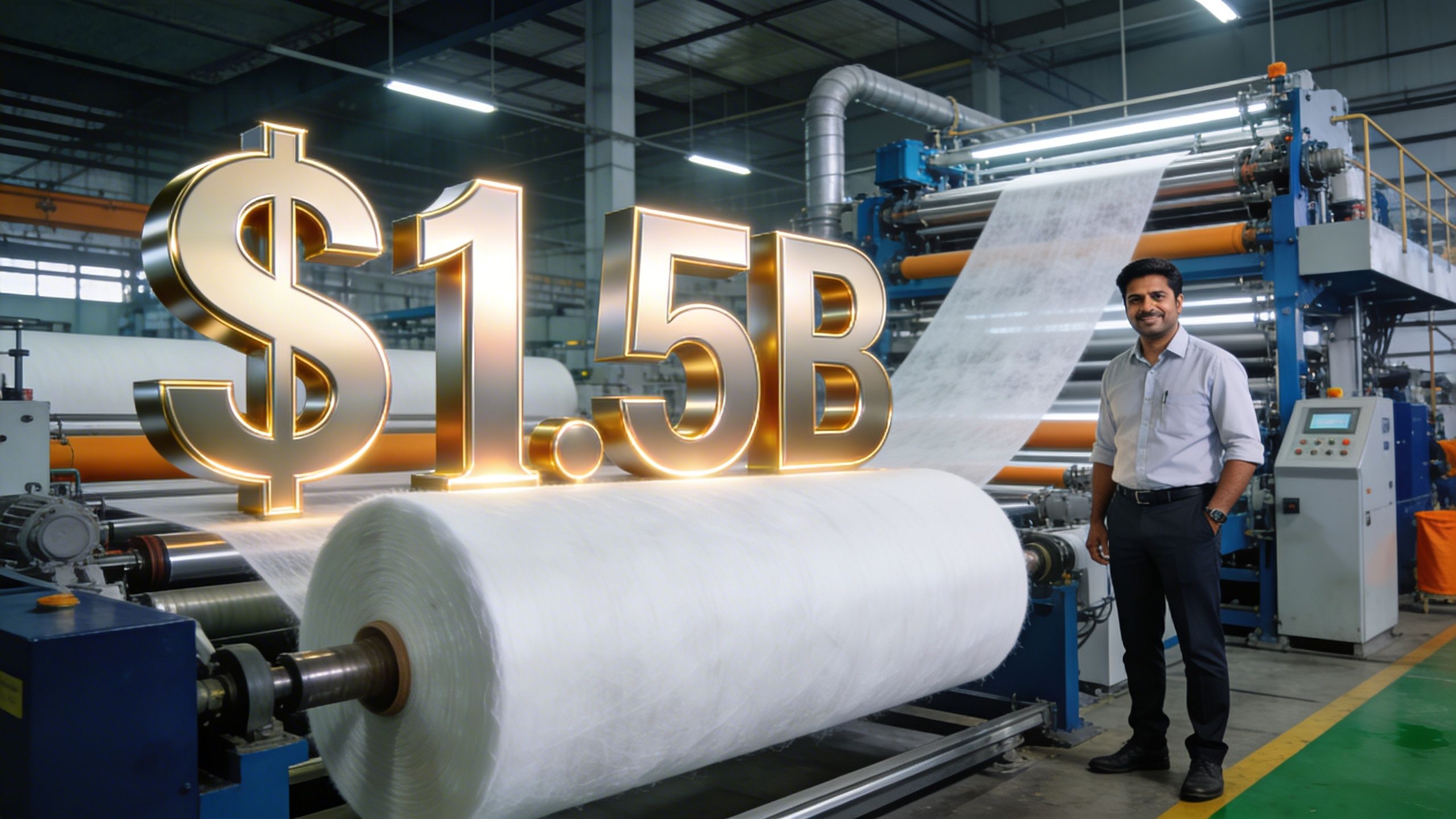
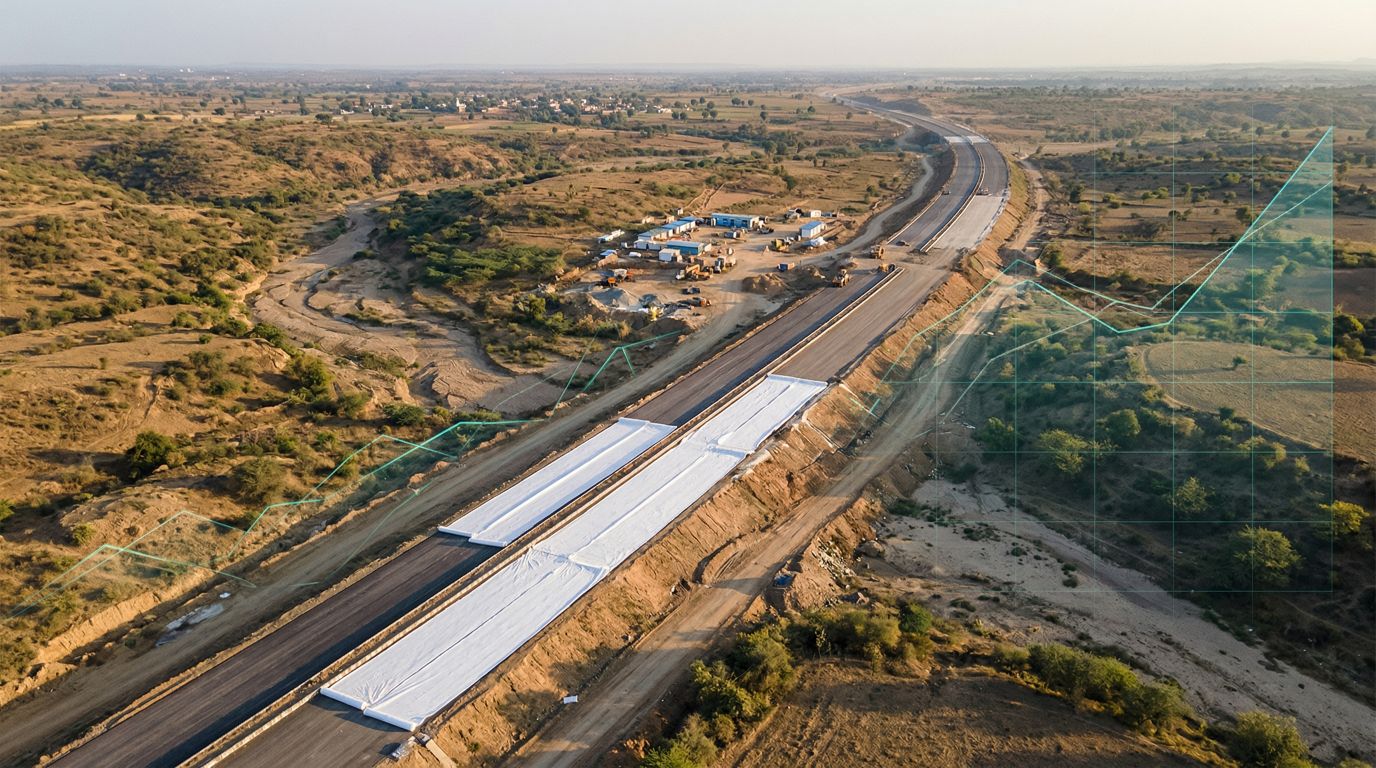
The demand drivers are concrete. India currently has over 700 tunnels under construction across national highways, with a combined length of nearly 2,850 kilometres. The Bharatmala highway programme targets more than 65,000 kilometres of new and upgraded roads. Every kilometre of highway and every tunnel lining requires geotextile fabric for soil stabilisation, drainage, and erosion control. Geotextiles already account for over 70 per cent of India's geosynthetics market, which itself was worth an estimated USD 1.5 billion in 2023-24 and is on track to hit USD 2.7 billion by 2030.
Add hygiene products (diapers, sanitary pads, surgical disposables) and automotive interiors to the mix, and the production arithmetic gets uncomfortable. India's installed nonwoven capacity has grown, but not at the pace these end-use sectors demand. The result is a persistent import bill for specialised nonwoven grades that domestic mills cannot yet produce consistently or at scale.
The bottleneck is not raw material. India has polypropylene and polyester fibre supply. The bottleneck is processing — specifically the carding, cross-lapping, needle punching, and thermal bonding stages that convert loose fibre into finished nonwoven rolls. These processes require automated, high-speed production lines to achieve the throughput and consistency that large buyers specify. Manual or semi-automated setups cannot deliver the GSM uniformity and tensile strength that infrastructure-grade geotextiles demand.
Companies like Magnum Resources, which represents FKgroup of Italy in India, are fielding inquiries from manufacturers looking to set up or upgrade nonwoven production lines. FKgroup builds complete lines covering fibre opening, carding, cross-lapping, needle punching, and thermal bonding. The interest is coming from both established textile companies diversifying into technical textiles and new entrants drawn by the sector's growth projections.
Government policy is pushing in the same direction. The National Technical Textiles Mission (NTTM) and the PLI scheme for technical textiles aim to reduce import dependence and build domestic manufacturing capability. The Union Budget 2025-26 allocated over Rs 11.2 lakh crore for capital infrastructure spending — the highest ever — which indirectly feeds nonwoven demand through road, rail, and water projects.
The market projections are clear enough. The question for Indian nonwoven producers is whether they can install and commission automated production lines fast enough to capture a larger share of domestic demand before imports fill the gap permanently.